Product Description
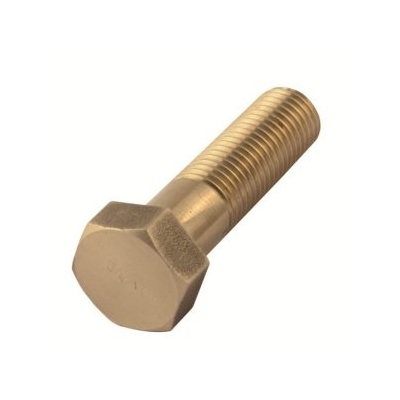
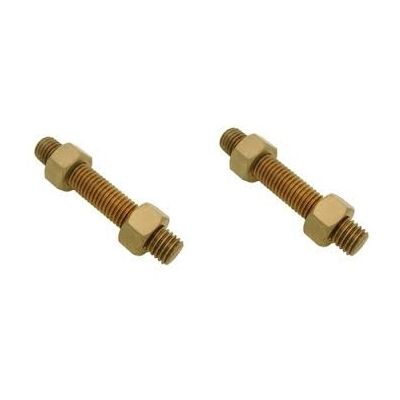
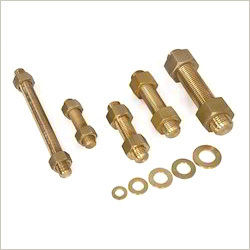
Aluminum Bronze Bolts are utilized to handle seawater, acidic mining waters, nonoxidizing acids, and industrial process fluids in marine hardware, shafts, pump, and valve components. However, their demonstrated ability to fight corrosion has significantly expanded its use and is now being employed for many additional industrial applications. Aluminum Bronze Bolts are available at cost-effective prices. They are very effective as well as economical and safe to use. They require very low maintenance and replacement costs.
Exceptional Corrosion ResistanceAluminium Bronze Bolts are engineered to resist corrosion exceptionally well, particularly in harsh saline and acidic environments. This makes them ideal for marine and chemical applications, significantly extending the lifespan of fasteners exposed to aggressive elements.
Versatile Design and CustomizationWith a wide range of lengths (12 mm to 300 mm) and diameters (M6M36), as well as the option for standard or fine thread pitch, these bolts can be tailored for specific requirements. Customization services allow for unique head types, finishes, and standards compliance as per client drawings or samples.
High Mechanical PerformanceManufactured from high-strength DIN 2.0978 / CuAl10Fe5Ni5 / UNS C63000 aluminium bronze, these bolts offer superb tensile strength (up to 800 MPa), wear resistance, anti-galling features, and support high load bearing and torque requirements, ensuring reliability in demanding industrial applications.
FAQs of Aluminium Bronze Bolts:
Q: How are Aluminium Bronze Bolts typically used in industrial and marine applications?
A: Aluminium Bronze Bolts are commonly used to fasten machinery and structures in industries such as marine, chemical, and petrochemical processing, where high corrosion resistance, strength, and durability are crucial. Their non-magnetic properties further suit applications near sensitive equipment.
Q: What customization options are available for Aluminium Bronze Bolts?
A: Customization options include different lengths (12 mm to 300 mm), diameters (M6 to M36), thread types (standard/fine, Metric, UNC, UNF), head types (hex, round, square), surface finish selection, and packaging. Modifications can be made as per client drawings or samples to meet specific needs.
Q: When should I choose Aluminium Bronze Bolts over standard steel or stainless steel fasteners?
A: Aluminium Bronze Bolts are particularly beneficial in environments with saline, acidic, or corrosive exposure where typical steel or stainless steel fasteners would degrade more quickly. They also provide superior wear resistance and are non-magnetic, making them suitable for specialized industrial and marine applications.
Q: What standards and quality controls are Aluminium Bronze Bolts compliant with?
A: These bolts comply with standards such as DIN, ASTM, BS, and IS. They are also ROHS and REACH compliant, ensuring that they meet international safety and environmental guidelines. Each batch undergoes strict quality control to maintain dimensional tolerance and mechanical properties.
Q: Where are Aluminium Bronze Bolts commonly manufactured and supplied from?
A: Aluminium Bronze Bolts are manufactured and exported from India in facilities equipped for precision engineering and high-volume production. The monthly capacity can reach up to 10,000 pieces, ensuring timely supply for large projects worldwide.
Q: How does the surface treatment and finish affect the performance of Aluminium Bronze Bolts?
A: Surface treatments such as polishing or bright/natural finishes not only enhance the appearance of the bolts but also improve resistance to oxidation and wear. Custom finishes may be specified to match unique application requirements.
Q: What are the key benefits of selecting Aluminium Bronze Bolts for high-load applications?
A: These bolts provide high tensile strength (up to 800 MPa), excellent load-bearing capability, superior anti-galling attributes, and high hardness (160220 HB). This combination ensures longevity and reliability in situations where mechanical performance is critical.









 Send Inquiry
